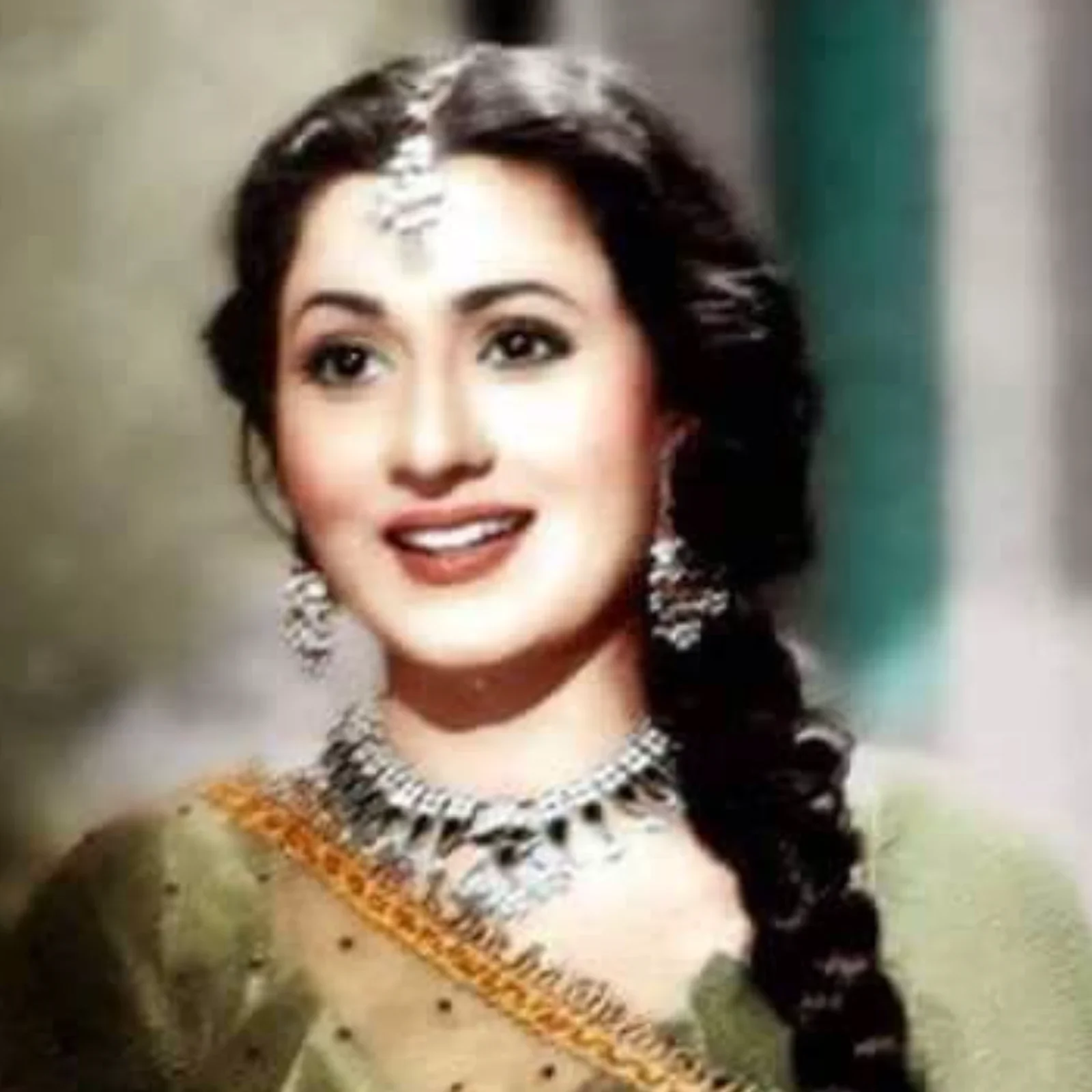
Rank #60Status: Draft
Madhubala
“The Venus of Indian Cinema: A Siren of Timeless Beauty and Unbridled Passion”
0Clout Score
0Mentions
3Media Files
Followers
0
Career Eras
0
Connections
0
Arena Appearances
0
Quick Links
Full Life Story
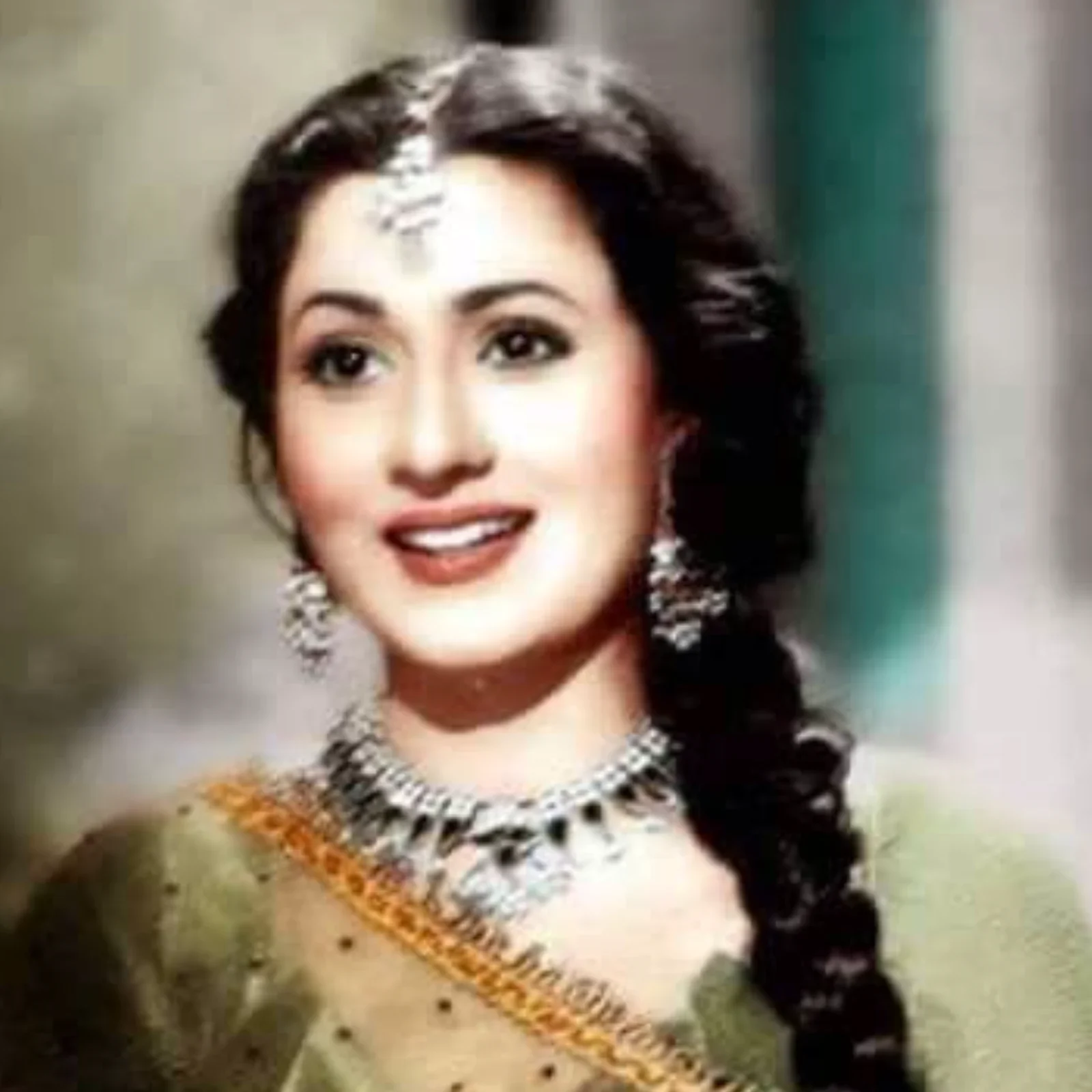
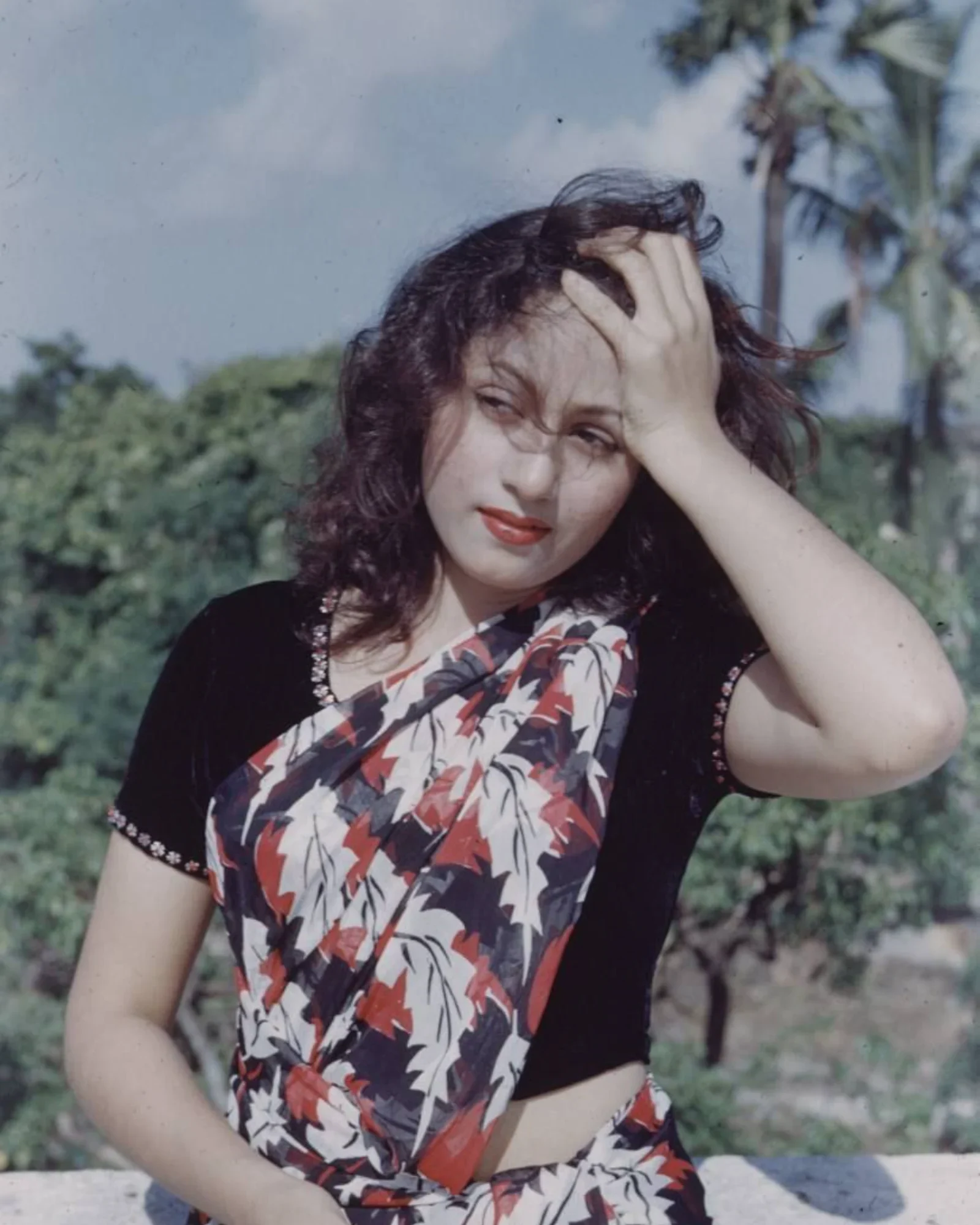
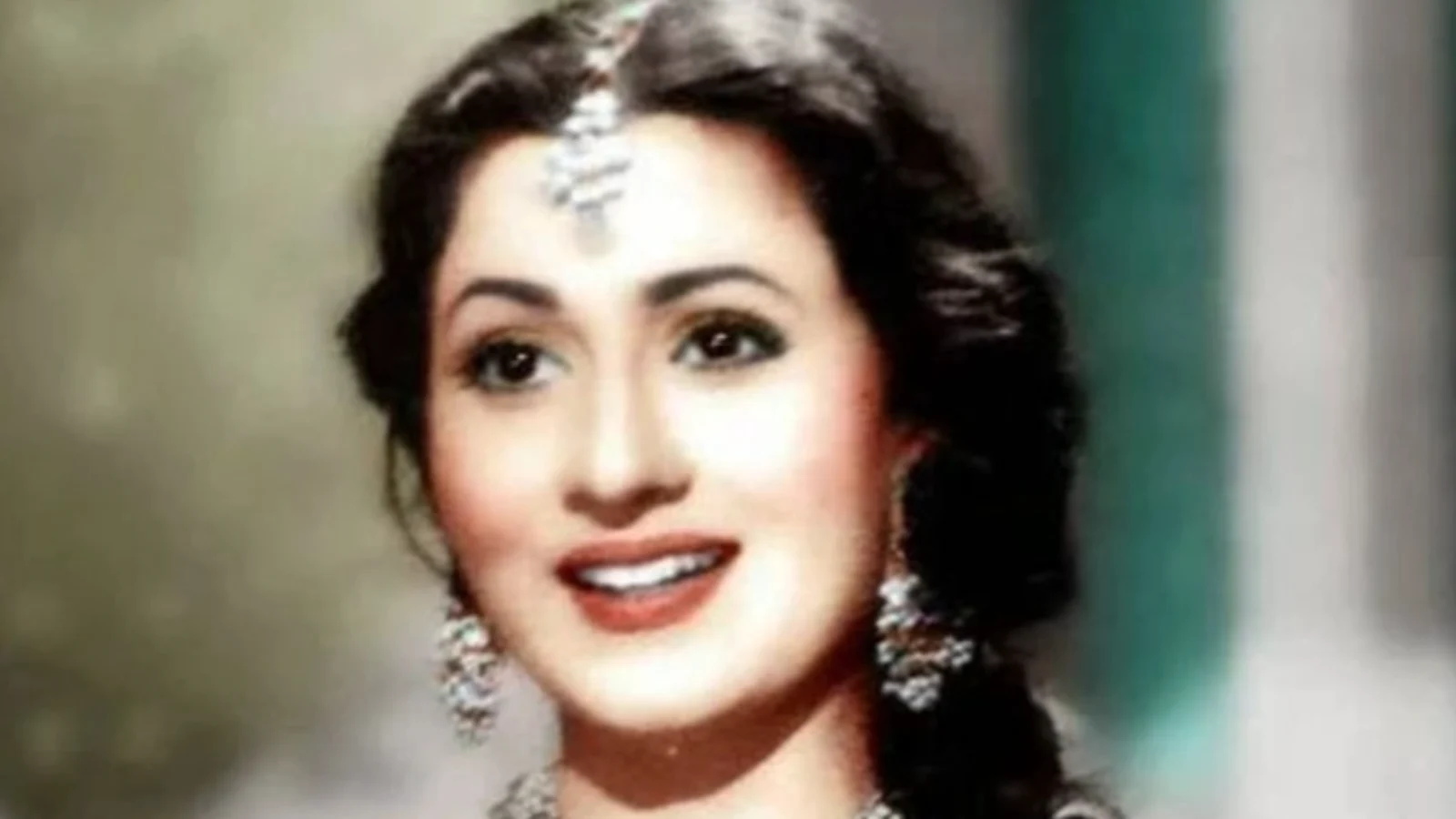
Mumtaz Jehan Begum Dehlavi (14 Feb 1933 – 23 Feb 1969), immortalized as Madhubala, exploded onto the Hindi‑film scene to become one of Indian cinema’s most celebrated and highest‑paid stars of the 1950s, dazzling audiences in over 70 titles that spanned slapstick comedy, chilling horror, sweeping historical epics and soulful romances. Hailed as “the Venus of Indian cinema,” her magnetic beauty and unconventional screen presence turned her into a timeless Bollywood icon, from her debut as a child artist in Basant (1942) to breakthrough leads in Neel Kamal (1947) and the haunting Mahal (1949). She cemented her star power with hits such as Badal (1951), Tarana (1951), Amar (1954), the breezy Mr. & Mrs. '55 (1955), the beloved Chalti Ka Naam Gaadi (1958), Half Ticket (1962), crime thrillers Howrah Bridge and Kala Pani (both 1958), and the musical Barsaat Ki Raat (1960). Her legendary portrayal of Anarkali in Mughal‑e‑Azam (1960)—the nation’s highest‑grossing film at the time—earned her a Filmfare Best Actress nomination and critical acclaim that still ranks among the finest performances in Indian film history. Beyond acting, she co‑founded Madhubala Private Ltd. in 1953, producing three films, while maintaining a fiercely private life that nonetheless captured headlines for her charitable work, a high‑profile romance with Dilip Kumar that fizzled amid the Naya Daur court saga, and her 1960 marriage to singer‑actor Kishore Kumar. Battling a congenital ventricular septal defect that caused chronic breathlessness and hemoptysis, Madhubala’s luminous career was cut short when she passed away at just 36, leaving an indelible legacy that continues to electrify Bollywood’s golden narrative. After her father’s 1940 job loss, seven‑year‑old Madhubala stepped into All India Radio, dazzling listeners with Khwaja Khurshid Anwar’s compositions. Her voice caught the eye of Rai Bahadur Chunnilal of Bombay Talkies, who urged the family to chase brighter prospects in Bombay. In the summer of 1941 the Khandas packed into a modest cowshed in Malad, and Chunnilal secured Madhubala a ₹150 juvenile part in the blockbuster Basant (July 1942), where she also recorded two songs. Though the film roared to commercial success, the studio cut her contract, sending the family back to Delhi amid mounting debts. By 1944 Devika Rani summoned Madhubala for Jwar Bhata, and despite missing the role, her father chose to plant permanent roots in Bombay, returning to the battered Malad neighbourhood. The April 1944 Bombay Dock explosion razed their home, but a timely cinema outing saved their lives, forcing them into a friend’s shelter. Determined to turn the tide, Khan positioned his daughter as the family’s breadwinner—a claim his daughter’s sister later clarified as a natural passion for singing, dancing, poetry, not coercion. That year Madhubala inked a three‑year deal with Ranjit Studios; studio chief Chandulal Shah deemed her too young for leads, so she dazzled as Baby Mumtaz in five child roles, including Mumtaz Mahal (1944) and Phoolwari (1946), earning ₹300 a month and becoming the sole provider for eight relatives. While shooting Phoolwari, she suffered her first bout of haemoptysis, the ominous first sign of the heart defect that would haunt her throughout her meteoric career. Madhubala's career took a dramatic turn in 1947 when director Kidar Sharma cast her as a young princess in the melodrama Neel Kamal, marking her first leading role. Despite initial doubts from Chandulal Shah, Sharma believed in her "raw talent" and enthusiasm, financing the film himself. Credited as "Mumtaz" in Neel Kamal, Madhubala's onscreen chemistry with Raj Kapoor was praised by critics, though the film itself was a commercial flop. She went on to appear alongside Kapoor in Mohan Sinha's Chittor Vijay and Dil Ki Rani, and N. M. Kelkar's Amar Prem. To boost her career, Madhubala lowered her fees and adopted the screen name "Madhubala," a Hindu name meaning "honey girl," to appeal to predominantly Hindu audiences and conceal her Muslim identity amid growing anti-Muslim sentiments. This strategic move paid off as she appeared in 24 films by 1950. Her breakthrough came with Lal Dupatta, a village romance that solidified her "distinct persona," earning her critical acclaim. Baburao Patel hailed it as her "first milestone of maturity in screen acting." In 1949, Madhubala received further praise for her supporting role in Paras, with Jagdish Bhatia comparing her performance to Jane Wyman's in Johnny Belinda. During filming Singaar, Madhubala's health took a hit, fainting on set due to an incurable ventricular septal defect, which was kept private to protect her career. Her portrayal of an elusive woman in Mahal established her as a leading lady, with director Kamal Amrohi believing her relative unfamiliarity added to the character's mystique. Released in October 1949, Mahal was a critical and commercial success, transforming Madhubala into a "nationwide sensation." The film's success was followed by another hit, Dulari, cementing her status as Hindi cinema's leading female star, surpassing Suraiya. As her popularity soared, Madhubala refined her persona with English lessons and classical dance training, despite struggling with the physical demands due to her recurring heart condition. The dawn of the 1950s saw Madhubala cement her iconic status, even as her namesake romantic musical Madhubala, co-starring Dev Anand, faltered at the box office despite the rare honor of being named after its leading lady, a feat previously achieved only by 1930s legend Sulochana. Her true triumph arrived with the drama Beqasoor, where her portrayal of a woman forced into stage dancing after her husband's wrongful implication in a financial crime earned critical acclaim from The Indian Express and propelled the film to become one of the year's highest earners. Yet, beneath the rising stardom, a storm brewed. Known for her impeccable punctuality and elusive public persona, Madhubala found herself at the center of media scrutiny over her father Ataullah Khan's stringent control, with reports detailing his restrictions on her studio hours, press interactions, and interviews. This reclusivity escalated into a full-blown smear campaign following a production dispute during Nirala, when her refusal to enter a pool for hygiene reasons led director P. L. Santoshi to halt filming and publicly brand her difficult. Despite Khan’s apology and the resumption of production, the press barrage continued, prompting Khan to implement contract clauses banning journalists from her sets. This unprecedented move sparked outrage, culminating in the All India Action Committee’s formal media boycott against Madhubala, refusing to publish her photos or publicity, and even generating death threats that necessitated official security. Defying the boycott, her film Hanste Aansoo still soared commercially, while Madhubala herself demonstrated her compassionate spirit with a ₹50,000 donation to East Bengali refugees and ventured into production with Prem Narayan Arora on Pardes. The media war finally ended in early 1951 with an apology brokered by boycott leader B. K. Karanjia, who later conceded the journalists' "ego problems" had led to an "over-reaction." Far from tarnishing her image, the controversy only amplified her mystique and demand, with her fee skyrocketing to ₹1.5 lakh per film, and seven releases in 1951, including the massive box office hit Baadal. Her magnetic appeal transcended borders, capturing the lens of American photojournalist James Cobb Burke for Life magazine's proposed "Movie Queens" feature. Off-screen, her life was equally dramatic; a brief, religiously-divided romance with Baadal co-star Prem Nath, though ending in six months due to Khan’s disapproval, blossomed into a lifelong friendship. But it was her passionate, all-consuming relationship with actor Dilip Kumar, ignited during the 1951 filming of Tarana, that marked her happiest years. Friends recall her considering herself "married to him," exchanging rings in a profound commitment. Their electrifying chemistry lit up Tarana, a critical and commercial smash, with critics praising their "lived" performances. Their collaboration continued with Sangdil, a moderately successful Jane Eyre adaptation, and further projects were planned to capitalize on their iconic pairing. By 1952, her global allure reached legendary status when Hollywood icon Frank Capra, "enraptured" by her photograph, expressed keen interest in meeting her for a potential Hollywood offer – a dream ultimately thwarted by her father’s refusal. During the 1953‑57 surge, Madhubala confided that once the studio lights dimmed, she shed the glittering persona and longed for the simplicity of an ordinary girl, finding that only within her home could she truly be treated as such. "I remain so much within the four walls of my home," Madhubala declared in 1954, a stark contrast to the burgeoning ambition that drove her to seek more profound roles and collaborations with cinematic titans. After a setback with Bimal Roy's Biraj Bahu due to her soaring fee, she seized the lead in Mehboob Khan’s Amar when Meena Kumari withdrew. An undeniable force, 1953 saw her produce and star in Rail Ka Dibba, a venture that, despite mixed reviews, showcased her independent spirit. That same year, she co-founded Madhubala Private Ltd. with Ataullah Khan, a bold move into production that regrettably led to financial losses from abandoned projects. The true test of her mettle began in late 1953 with K. Asif’s epic Mughal-e-Azam. Cast as the legendary Anarkali opposite Dilip Kumar, she embarked on a grueling seven-year intermittent production, battling not only the film's monumental scale and Asif's perfectionism but also the severe physical demands that exacerbated her recurring heart condition, often leading to collapses on set. Her health publicly faltered in early 1954 during Bahut Din Huwe, suffering bouts of haemoptysis that forced a sabbatical and put her illness under the harsh glare of the press for the first time. Despite this, she returned to complete the film. Though Bahut Din Huwe flopped, Amar emerged as a critical darling, hailed as her "first truly mature performance" and a "protofeminist" portrayal, even if its controversial subject matter led to a box-office failure and the disheartening industry whisper that she was a "jinx." Unbowed, 1955 saw her conquer new ground, balancing Guru Dutt’s smash hit Mr. & Mrs. '55 – where her comedic brilliance shattered her "tragic heroine" image, becoming one of the year’s highest-grossing films – with her own production, Naata. While Naata earned critical praise for her performance, its commercial failure forced her to mortgage her personal bungalow, a heavy price for creative freedom. Amidst these professional highs and lows, her highly publicized romance with Dilip Kumar blossomed, publicly confirmed at his film premiere. However, the path to matrimony was fraught: her father, Ataullah Khan, saw Kumar's influence as a threat to his income, especially Kumar's desire for Madhubala to retire. The simmering tension exploded in 1956 during the filming of B. R. Chopra’s Naya Daur, when Khan’s refusal to allow her to travel for an outdoor shoot ignited a criminal complaint for cheating, setting the stage for one of Bollywood's most dramatic personal and legal battles. Amid the high‑profile breach‑of‑contract saga that dominated headlines, Madhubala’s once‑glamorous liaison with Dilip Kumar shattered; although Kumar later withdrew the charges, his courtroom testimony against both Madhubala and Khan—accusing her of unprofessionalism—sent shockwaves through her world. According to biographer Madhur Bhushan, the sting of Kumar’s words and the perceived slight to her father left her deeply wounded, and Kumar’s later memoir revealed that friction also stemmed from Khan’s push to weave his own projects into Madhubala’s family‑run productions, a move he resisted. Declaring their priorities irreconcilable, Kumar deemed the split inevitable. As the Naya Daur case unfolded, Madhubala trimmed her slate, pulling out of Sohni Mahiwal and Savera and turning down Guru Dutt’s Pyaasa after being forced to choose between two lead female parts. Yet she pressed on with Mughal‑e‑Azam, weathering intermittent set disruptions caused by lingering tensions with Kumar, and even embraced night‑shoots—normally frowned upon by Ataullah Khan—for both Mughal‑e‑Azam and Om Prakash’s Gateway of India. This period also yielded hits such as Sohrab Modi’s costume epic Raj Hath (1956) and Devendra Goel’s Ek Saal (1957). Her turn in the black‑comedy Gateway of India (1957), where she portrayed a young heiress fleeing a greedy uncle in a single “Chaplinesque” outfit, earned critical acclaim; critic Deepa Gahlot later crowned it one of Madhubala’s finest performances in Take‑2: 50 Films That Deserve a New Audience. 1958 exploded as a landmark year, unleashing six Madhubala blockbusters, including four of the year’s highest-grossing titans: the electrifying crime thrillers Kala Pani and Howrah Bridge, the melodious Phagun, and the uproarious Chalti Ka Naam Gaadi. She fearlessly embraced roles atypical for Hindi film heroines, notably as a "daredevil" journalist in Kala Pani, aiding Dev Anand's character, a performance that earned acclaim despite some critics feeling she was overshadowed by Nalini Jaywant. Simultaneously, the epic Mughal-e-Azam consumed her, with battle scenes and the iconic "Pyar Kiya To Darna Kya" sequence filmed amidst her other projects. For Howrah Bridge, a Hong Kong cinema-influenced sensation, Madhubala's generosity shone as she waived her fee for newcomer director Shakti Samanta, delivering an unforgettable portrayal of Edna, an Anglo-Indian club dancer opposite Ashok Kumar. Her seductive performance of "Aaiye Meherbaan" became an instant phenomenon, with critic Vijay Lokapally retrospectively declaring she "blazed a trail," setting an unparalleled standard for future heroines. Off-screen, the set of Chalti Ka Naam Gaadi ignited a passionate romance with co-star Kishore Kumar, then navigating a separation from his first wife. This "full-fledged mainstream comedy" became one of the 1950s' biggest hits, sparking further comedic collaborations between the magnetic pair. By 1959, their relationship intensified, fueling a media frenzy over a possible marriage and widespread speculation about Kumar's conversion to Islam. Yet, Madhubala, ever independent, firmly stated in a 1959 Rangbhumi interview that she would never demand her partner change his faith. As Mughal-e-Azam neared its dramatic close, her health began to wane; for authenticity in her character's imprisonment scenes, she stoically insisted on real iron chains, enduring skin abrasions and enforced bed rest. The colossal production finally wrapped in May 1959 after an astonishing 500 days of filming spanning eight years, becoming the era's most expensive Indian film at ₹15 million. Amidst this, August saw her join Kishore Kumar’s ambitious Suhana Geet, while 1959 also delivered Samanta's social drama Insan Jaag Utha and a celebrated reunion with Raj Kapoor in the popular crime comedy Do Ustad. Her dual performance as contrasting twin sisters in S. K. Prabhakar's Kal Hamara Hai garnered particular critical acclaim, with K. B. Goel of Thought praising her "sensuality rare in Indian films" in the seductive sister's role, finding her compelling in both. Tragically, her escalating illness forced a brief but impactful sabbatical in November 1959, halting production on Jhumroo, Suhana Geet (both with Kumar), and Sharabi (with Dev Anand). Back on set in early 1960, Madhubala dove into Madhubala Private Ltd.’s sophomore venture—a comedy called Mehlon Ke Khwab, produced by Ataullah Khan and co‑starring Kumar and Chanchal. The March release drew scathing blows from Baburao Patel, who lamented that she looked ill and “neither acts well nor looks good.” Undeterred, August saw her crown the industry: Mughal‑e‑Azam opened with the widest distribution ever, smashed box‑office records, and cemented her status as the era’s biggest star. Critics roared over her Anarkali—Filmfare hailed it as her finest work, while The Indian Express praised the nuanced emotional shifts and declared “Pyar Kiya To Darna Kya” the film’s unforgettable hit. The role earned her a Best Actress nod at the 8th Filmfare Awards and a win at the Film Journalists’ Association (though she missed the ceremony). Decades later, pundits still rank the Anarkali performance among Indian cinema’s all‑time greats, with Filmfare placing it 11th on its 2010 “80 Iconic Performances” list. Though often dubbed her swan song, Madhubala kept the momentum alive with the crime thriller Jaali Note and the musical Barsaat Ki Raat — the latter’s headstrong heroine Shabnam (Madhubala) eloping with Bharat Bhushan became the year’s second‑biggest grosser, solidifying her as 1960’s most successful leading lady, according to Box Office India. A string of high‑profile offers arrived, but a worsening heart condition forced her to turn many down. Among her final completions was Kishore Kumar’s Jhumroo, delayed by her frailty and a near‑catastrophic set collapse at Filmistan Studio that she and Kumar narrowly escaped. She withdrew from Bombai Ka Babu, Naughty Boy, and had her unfinished Boy Friend scenes finished by Chanchal. After a two‑year courtship, the pair wed in a civil ceremony on 16 October 1960—defying press rumors of a religious conversion. Their union, seen as a temperamental mismatch, sparked fierce opposition from Kumar’s family, especially his mother, who compelled a second Vedic ceremony; the couple briefly set up shop away from his household amid the familial tension. Reasoning and Process The task was to transform a detailed Wikipedia excerpt about Madhubala’s final years (1960–1969) into a concise, high‑energy idol profile suitable for FameLedger. The key requirements were: 1. Maintain factual accuracy – Preserve all concrete details from the source (marriage to Kishore Kumar, retirement, health decline, London trip, prognosis, depression, suicide attempt, unfinished projects, final films, attempted comeback, bedridden state, reading poetry, visits from Dilip Kumar, etc.). 2. Adopt a dramatic, bold tone – Use vivid, emotive language that fits FameLedger’s entertainment‑news style while avoiding sensationalism or invented facts. 3. Polish the prose – Convert the original first‑person quotes and narrative into a third‑person profile, streamline redundancies, and ensure smooth flow. 4. Formatting constraints – Deliver only the final paragraph without any headings, bullet points, markdown, or extra labels. The rewrite condenses the chronology, highlights the emotional stakes (her “heart‑wrenching struggle,” “deep depression,” “died every moment”), and emphasizes her professional legacy (hits like Jhumroo and Sharabi, unfinished projects). It also notes the strain on her marriage and her final days spent with poetry and home‑projected films, ending with Dilip Kumar’s poignant visit. Rewritten Paragraph Madhubala's final years were a heart‑wrenching struggle with her congenital heart defect, which had taken a devastating toll on her health. After marrying Kishore Kumar in 1960, she announced her retirement from films, but not before completing Jhumroo, which became a box‑office hit. Her condition continued to worsen, with episodes of vomiting blood and breathlessness leaving her severely weak. Desperate for a cure, Madhubala and Kumar traveled to London, but doctors deemed surgery too risky and gave her only a year or two to live. The terminal diagnosis sent Madhubala into a deep depression, and she even attempted suicide. Despite this, she lived for another seven and a half years, but Kumar recalled that she “died every moment.” As Kumar's career soared, their marriage faced strain, with rumors of infidelity and a busy schedule driving them apart. Madhubala's film projects dwindled, with many left unfinished, including Chalaak and Suhana Geet. Her final release during her lifetime was 1964's Sharabi, co‑starring Dev Anand. In a last‑ditch effort to revive her career, Madhubala attempted to resume work on Chalaak in 1966, but the studio environment proved too much, triggering a severe episode of vomiting blood. By then, she was largely bedridden, losing weight and restricting her contact to a few close friends. Her days were spent reading Urdu poetry and watching her films, particularly Mughal‑e‑Azam, using a home projector. Even Dilip Kumar visited her one last time, finding her frail and struggling to smile. Madhubala's life was cut tragically short on 21 February 1969, when her condition took a drastic turn, developing a scorching high fever of 105 °F (41 °C) complicated by jaundice. Although she showed marginal improvement the following day, her health gave way entirely by the evening of 22 February. Just nine days after celebrating her 36th birthday, Madhubala passed away at 9:30 a.m. on 23 February. The Indian film industry mourned her loss at a funeral attended by a who's who of Bollywood, including Kishore and Ashok Kumar, Nargis, Meena Kumari, Raj Kapoor, and Sunil Dutt, who paid their respects as per Sunni Muslim rites at the Juhu Muslim Cemetery in Santacruz, Bombay. The event drew front-page coverage in major Indian newspapers, with The Indian Express hailing her as "the most sought-after Hindi film actress" of her era. Tributes poured in, with music composer Naushad drawing parallels with the legendary Anarkali, while friend Nadira remembered her as someone who "lived forever and ever". Madhubala's legacy continued to inspire, becoming the first Indian star to be officially mourned by the Pakistani Film Producers' Association in May 1969. Her final screen appearance came in 1971 with the swashbuckler film Jwala, which was completed using body doubles after her passing. In 2010, her tomb was demolished, and her remains were relocated to a private location. Madhubala's rise to stardom in the early 1950s catapulted her to unprecedented fame, earning her the title of India's top star and one of the most celebrated actors of the post-independence era, a period hailed as the Golden Age of Hindi cinema. Dubbed the "Venus of the Indian screen" by editor Baburao Patel, her captivating physical attractiveness and on-screen presence made her a scopophilic gem, often typecast in roles that showcased her beauty and sex appeal. With a potential audience size spanning across 420 million people in India and Pakistan, international outlets took notice, with American journalist David Cort describing her as "the biggest star in the world". Her versatility shone in films like Mahal and Howrah Bridge, where she portrayed mysterious and alluring women, and comedies like Mr. & Mrs. '55 and Chalti Ka Naam Gaadi, where she embodied a modern, Westernized persona. Unconventional for a leading lady at the time, Madhubala built a reputation for her performances in comic roles, and her image was associated with a range of modern fashion trends, including off-shoulder dresses, trousers, and a distinctive wavy hairstyle. Critics drew comparisons with Hollywood icons Rita Hayworth and Ingrid Bergman, while her eroticized image and on-screen persona embodied the ideal of post-independent Indian womanhood, making her a symbol of a revolution. As her career progressed, media attention increasingly focused on her private life, with rumors of romantic relationships and controversies surrounding her personal affairs making headlines. Despite this, Madhubala's legacy endured, with her beauty, romances, illness, and early death becoming defining elements of her public image, forever cementing her status as a cultural icon. From her explosive debut at just nine years old to becoming a cinematic titan, Madhubala's career was a whirlwind of breathtaking performances and industry-shaking success. Appearing in a staggering 73 films between the early 1940s and mid-1960s, she first graced the silver screen in an uncredited role before signing with Ranjit Studios. Her true ascent began with director Kidar Sharma's Neel Kamal (1947), and she solidified her stardom with the groundbreaking horror film Mahal (1949), a box-office phenomenon that defined an era. Collaborating with legends like Dev Anand and Dilip Kumar, Madhubala delivered a string of hits including Dulari (1949), Badal (1951), and Tarana (1951). Not content with acting alone, she boldly ventured into production with Pardes (1950) and Rail Ka Dibba (1953), co-founding Madhubala Private Ltd. in 1953. Despite facing early career setbacks and the harsh label of "box office poison," Madhubala shattered expectations with her role in Guru Dutt's Mr. & Mrs. '55 (1955), proving her unparalleled versatility. The late 1950s saw her popularity skyrocket with iconic performances in Kala Pani (1958), Howrah Bridge (1958), and the unforgettable Chalti Ka Naam Gaadi (1958), alongside acclaimed roles in Barsaat Ki Raat (1960) and Phagun (1958). Her portrayal of the tragic Anarkali in the epic Mughal-e-Azam (1960) cemented her status as a global icon, earning her critical accolades and a place in cinematic history, though the film's demanding production took a toll on her health. Despite facing personal health battles, Madhubala continued to captivate audiences until her final completed film, Sharabi, in 1964, with her sole color film, Jwala, released posthumously in 1971. Penned by Khatija Akbar and released by UBS Publishers' Distributors in 1997, 'Madhubala: Her Life, Her Films' opens with a heartfelt foreword thanking the allies who guided her research. The biography charts Madhubala’s 1933 Delhi birth, her meteoric 22‑year cinematic reign, her passionate liaison and marriage to legendary playback singer Kishore Kumar, and her tragic 1969 death from a ventricular septal defect. Akbar devotes extensive analysis to the making of the epic 'Mughal‑e‑Azam' (1960), the record‑breaking blockbuster that secured Madhubala a Filmfare Best Actress nomination. Inspired in 1992 by the absence of any comprehensive work on the icon, Akbar set out to “repay Madhubala for all the years of enjoyment” by mining archives of Filmindia, Filmfare, Movie Times, Shama and Screen, and securing a priceless 45‑minute interview with her erstwhile co‑star and lover Dilip Kumar in 1994. Though India Today’s Iqbal Masud panned the first edition for its “breathless gushiness,” the revamped second edition—released on Kindle on April 1 2011 and in paperback on October 10 as ‘I Want to Live: The Story of Madhubala’—earned praise, with The Tribune’s Rachna Singh hailing it as a cinematic‑sized tribute to a dazzling actress and remarkable human being.
Career Timeline
Career era data is still being curated for this icon.
Works & Awards
Works and accolades
Filmography
Producer roles
Connections & Rivalries
No connection graph published yet.
Coverage & Drops
No recent chatter on the wire.
Arena Record
No battle appearances recorded yet.
Media Vault